Discover Borthwick
A hamlet in the shadow of a castle
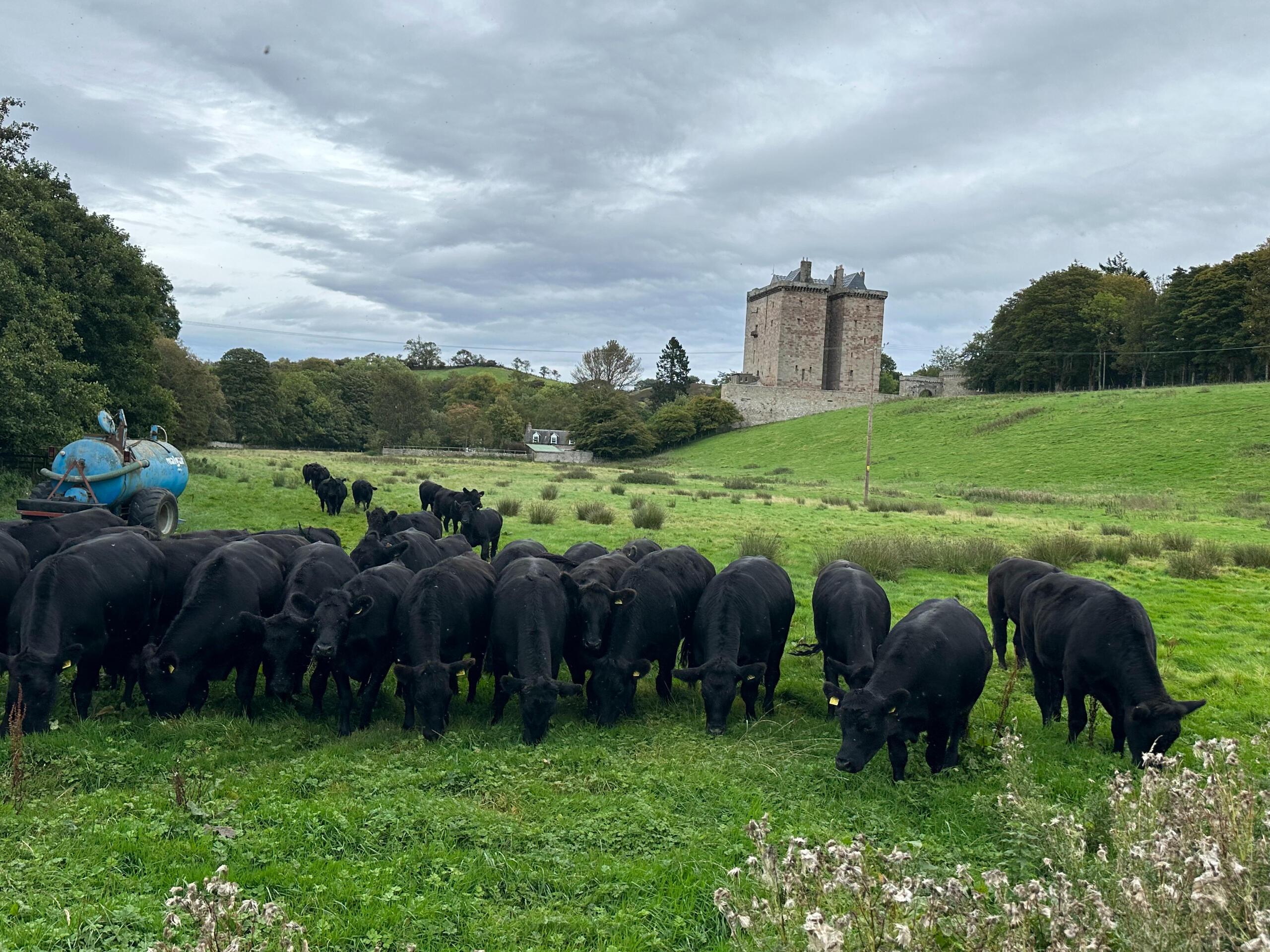
Borthwick is a tiny hamlet tucked into a fold of the Midlothian countryside: a handful of houses, a Victorian church with medieval roots, farmland on every side and, rising above it all, one of the most remarkable tower houses in Scotland. It is the kind of place people drive past without knowing it is there — which is exactly what our guests love about it.
The castle
Borthwick Castle
Borthwick Castle was built from 1430 for Sir William Borthwick, who had acquired the lands here. It is a massive double tower standing on a knoll above the valley — among the finest and best-preserved fifteenth-century keeps in Scotland — and its walls are said to be over 15 feet thick towards the base.
The castle guarded the old road south from Edinburgh to the Borders. Its great hall, on the first floor, survives with remarkably little alteration.
In 1650, during Oliver Cromwell's invasion of Scotland, the castle was bombarded after its owner refused to surrender it. A great gouge in the stonework of the east wall is believed to be the mark of Cromwell's cannon.
The twentieth century brought major repairs in 1913 and, during the Second World War, the castle was used as a safe store for national treasures. After a comprehensive restoration that began in 2013, it is now an exclusive-use venue for weddings and private stays.
Borthwick Castle is privately owned and run as an exclusive-use wedding and events venue. It is not open to casual visitors — please enjoy it from the public lanes and paths around the hamlet, and respect the privacy of the castle's guests.
1567
Mary, Queen of Scots at Borthwick
In June 1567, weeks after her marriage to the Earl of Bothwell — the chief suspect in the murder of her previous husband, Lord Darnley — Mary, Queen of Scots, came to Borthwick with Bothwell. On 11 June a force of rebel lords surrounded the castle. Bothwell escaped first, and Mary followed soon afterwards to join him at Dunbar.
Within days the confrontation at Carberry Hill ended with Mary's surrender; she never regained her throne.
- The record
- A contemporary letter records that 'the Lordis came suddenly to Borthwick', that Bothwell fled to Dunbar, and that the Queen followed 'disguised'.
- Tradition
- The story that Mary escaped dressed as a page, slipping away by a path through the glen, is long-established tradition. A small room in the castle is believed to have been her bedchamber.
The old parish church
Borthwick Church
The spire you can see from The Annex belongs to Borthwick's former parish church. A church dedicated to St Kentigern stood here by the twelfth century, when it was granted to Scone Abbey.
The present building was designed by Thomas Brown of Brown & Wardrop and built in 1862–64, but it incorporates much older fabric: the remains of a twelfth-century apse, the fifteenth-century south transept and the Arniston Vault.
The church is known for its fine medieval stone effigies of a knight and a lady in armour and costume of the period — traditionally identified as the first Lord Borthwick and his wife.
- The record
- The building, its dates and its surviving medieval parts are described in Historic Environment Scotland's listing.
- Tradition
- The identification of the effigies with William, 1st Lord Borthwick (died 1470) and his wife is the traditional attribution.
The church was sold by the Church of Scotland and has since been converted into a private home. It is no longer open to the public — please view it only from the road and respect the owners' privacy.
The landscape
Farmland, burns and the Gore Water
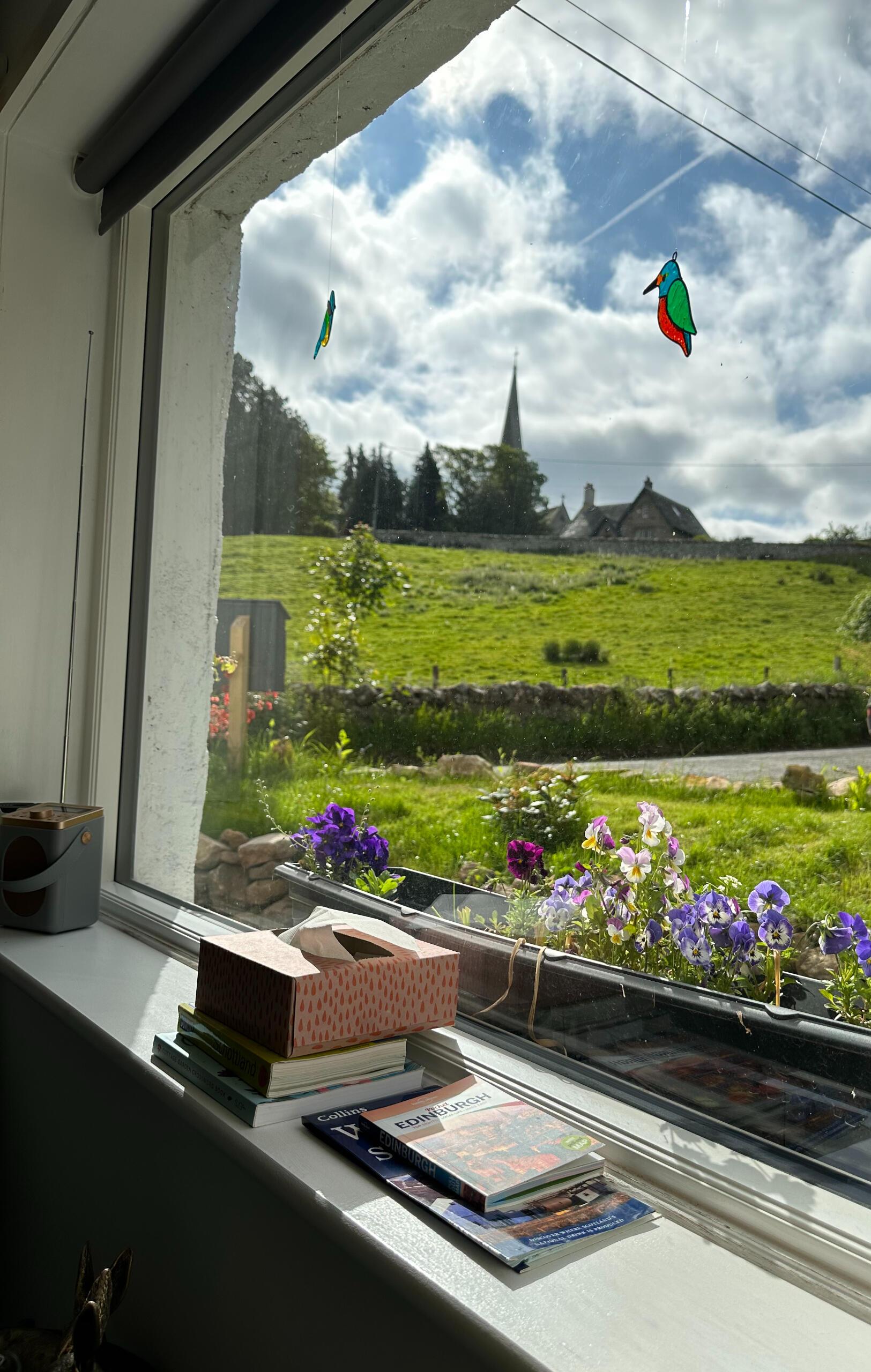
Borthwick sits in a small, well-cultivated valley. The Gore Water is formed where the Middleton North and South Burns meet, just beneath the castle. From there it winds north-west past Gorebridge before joining the South Esk.
Just to the east, the Tyne Water runs in a parallel valley beneath Crichton Castle. Midlothian Council's description of the Tyne Water Valley Special Landscape Area singles out the two valleys running side by side, with Borthwick and Crichton castles high above them.
The land around us has been farmed for centuries and still is. Fields are grazed by cattle and sheep and worked through the seasons, which is part of what makes the hamlet so peaceful — and why we ask guests to keep to paths and lanes, leave gates as they find them, and keep well clear of livestock.
Nearby heritage
Coal and community
A few miles north, Newtongrange grew up around the Lady Victoria Colliery, one of the best-preserved Victorian collieries in Europe. Coal mining shaped Gorebridge, Newtongrange and much of Midlothian for generations.
The colliery is now the National Mining Museum Scotland, which tells the story of Scotland's coalfields and the communities that worked them.
Our corner of the hamlet
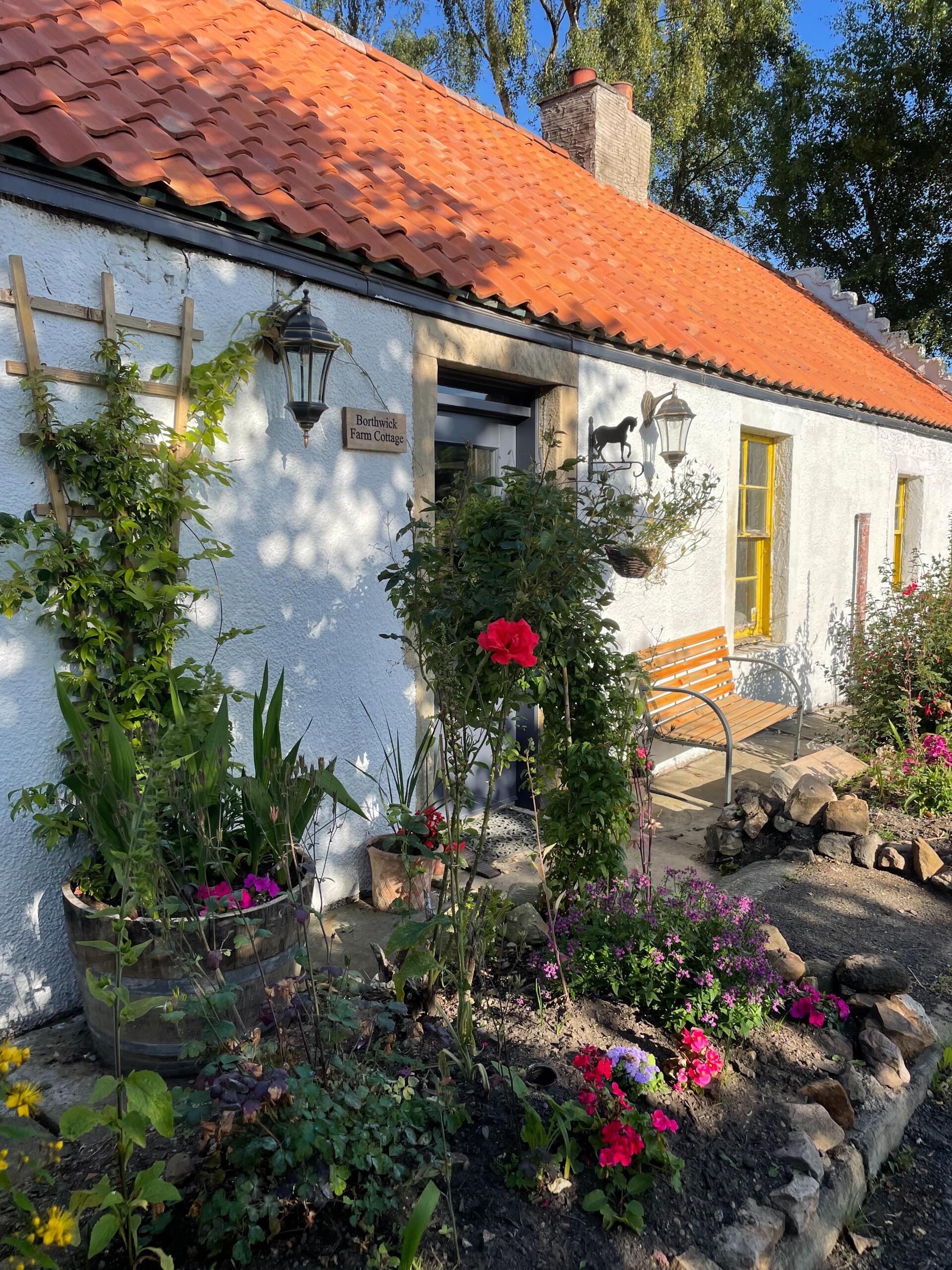
Borthwick Farm Cottage
Our centuries-old farm cottage looks across the field to the castle. Over the years we have restored it, and the outbuildings around it, ourselves — The Annex is attached to the cottage, and The Pottery is a converted timber outhouse.
The restoration is still a work in progress, and we love sharing it with our guests. You can read more in our story.
Stay at Borthwick Farm Cottage
Both of our retreats look out over the hamlet — The Pottery towards the castle, The Annex towards the church.